Car insurance is not a luxury in the United States—it’s a legal requirement in almost every state. But for millions of Americans living on a tight budget, paying monthly insurance premiums can feel overwhelming. If you’ve ever searched online for cheap car insurance for low-income drivers, you’ve probably seen viral claims, flashy websites, and social media ads promising insurance for as low as $20 per month.
Sounds tempting, right? But are those claims real—or risky?
In this detailed guide, we’ll break down low-income car insurance options in the USA for 2025, explain what actually works, expose common online myths, and help you choose safe, legal, and affordable coverage without falling into traps.
What Does “Low-Income Car Insurance” Really Mean?
Low-income car insurance doesn’t mean free insurance. Instead, it refers to state-supported programs, discounted policies, and smart coverage choices designed for people earning below a certain income level.
These options are meant for:
- Minimum-wage workers
- Students and part-time employees
- Single parents
- Seniors on fixed income
- Gig workers (Uber, DoorDash, freelancers)
Think of it like buying groceries with a coupon. You’re still paying—but less, and more wisely.
Why Standard Car Insurance Feels So Expensive for Low-Income Drivers
Before exploring solutions, it helps to understand the problem.
Car insurance companies calculate premiums based on:
- Driving history
- Credit score
- Location
- Type of vehicle
- Annual mileage
If you’re low-income, you may:
- Drive an older car with limited safety features
- Live in a high-risk ZIP code
- Have limited credit history
All of this can increase costs—even if you’re a safe driver.
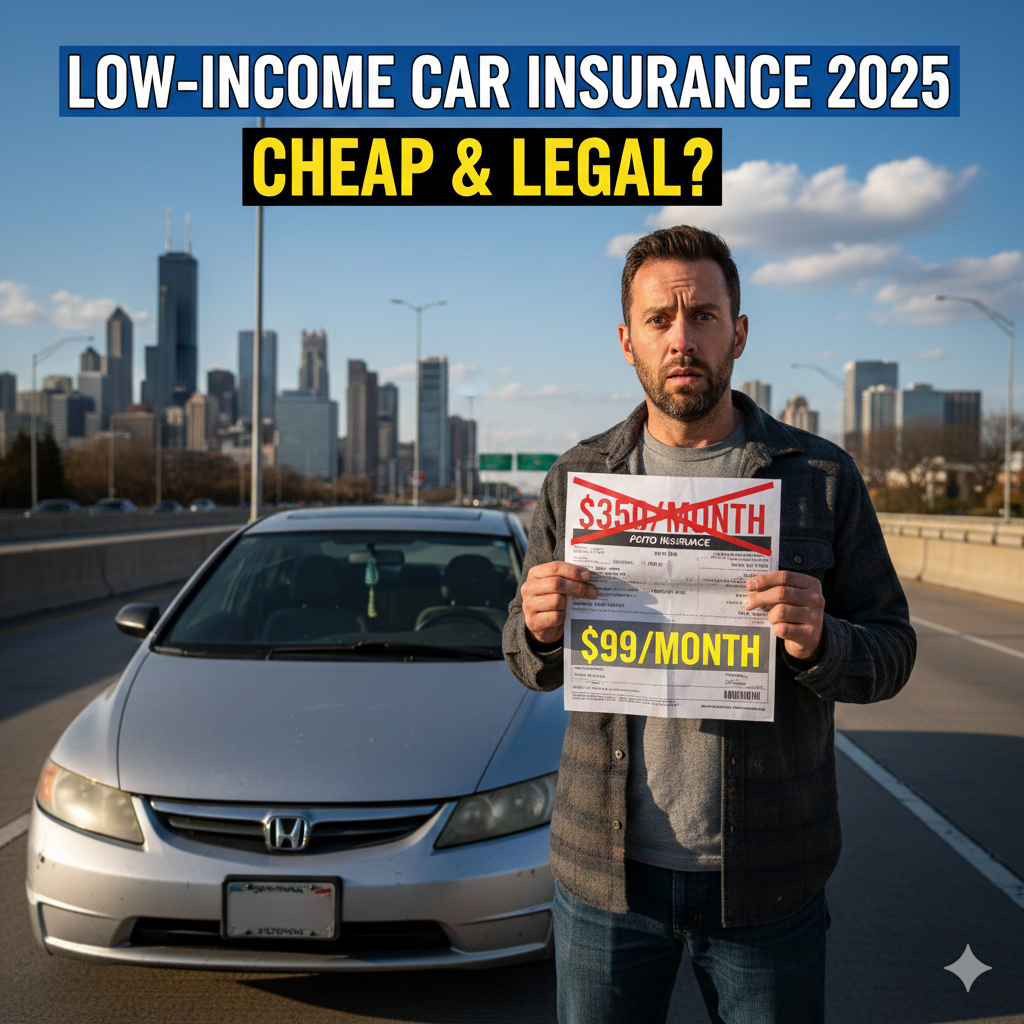
State-Sponsored Low-Income Car Insurance Programs (Best Option)
Some U.S. states offer government-approved low-cost auto insurance programs. These are legitimate, legal, and designed specifically for low-income residents.
States with Official Low-Income Insurance Programs
| State | Program Name | Key Benefit |
|---|---|---|
| California | CLCA (Low-Cost Auto Insurance Program) | Liability coverage from ~$25/month |
| New Jersey | SAIP | Emergency medical coverage |
| Hawaii | Public assistance discounts | Reduced minimum coverage |
| Maryland | MAIF | Coverage for high-risk, low-income drivers |
These programs usually require:
- Proof of income
- Valid driver’s license
- Clean or limited driving record
- Registered vehicle
If you qualify, this is the safest and cheapest legal option available.
Pay-Per-Mile Insurance: Ideal for Low-Mileage Drivers
If you don’t drive much, pay-per-mile insurance can be a game-changer.
Instead of paying a flat monthly fee, you pay:
- A small base rate
- A few cents per mile driven
It’s like paying only for the electricity you use instead of a fixed bill.
| Provider | Best For | Why It Helps |
|---|---|---|
| Metromile | City drivers | Low monthly cost |
| Nationwide SmartMiles | Occasional drivers | Flexible mileage pricing |
| Allstate Milewise | Budget-focused drivers | App-based tracking |
This option works well for:
- Work-from-home employees
- Seniors
- Students
- Second-car owners
Accident Forgiveness Car Insurance Explained 2025
Minimum Coverage Policies (Legal but Limited)
Every state sets a minimum insurance requirement. Buying only this coverage keeps premiums low, but protection is limited.
Minimum coverage usually includes:
- Bodily injury liability
- Property damage liability
| Coverage Type | Included? | Who It Protects |
|---|---|---|
| Liability | Yes | Other drivers |
| Collision | No | Your car |
| Comprehensive | No | Theft, fire, floods |
This option is best for:
- Older cars with low market value
- Drivers who need legal compliance only
Think of it like wearing basic shoes instead of premium sneakers—it works, but offers less comfort and protection.
Non-Standard Insurers for Low-Income Drivers
Some insurance companies specialize in high-risk or low-budget drivers. These are legal insurers, but premiums may vary.
Examples include:
- Dairyland
- The General
- Acceptance Insurance
These companies:
- Accept low credit scores
- Offer flexible payment plans
- Provide SR-22 filings if needed
However, always read reviews and policy terms carefully.
The Truth About Viral “Cheap Insurance” Websites
Social media is full of websites claiming:
- “Instant insurance approval”
- “No documents needed”
- “$10–$30 monthly coverage”
Here’s the reality.
Most of these sites:
- Act as lead-generation platforms
- Collect personal data
- Redirect users to advertisers
- Do NOT provide real insurance
| Viral Claim | Reality Check |
|---|---|
| Free or ultra-cheap insurance | No such thing legally |
| No documents required | Illegal in most states |
| Guaranteed approval | Misleading marketing |
It’s like clicking a “free iPhone” ad—you may not lose money immediately, but your data is the real price.
How to Lower Your Insurance Cost Legally in 2025
Even without special programs, you can reduce costs by making smarter choices.
Practical Money-Saving Tips
- Increase deductible slightly
- Bundle renters or home insurance
- Maintain continuous coverage
- Take defensive driving courses
- Ask for low-income or hardship discounts
| Method | Cost Impact |
|---|---|
| Higher deductible | Lower monthly premium |
| Safe driving course | 5–15% discount |
| Low mileage | Significant savings |
Small changes can add up to big savings over a year.
Real-World Example: How a Single Parent Saved Money
Maria, a single mother in Texas, earned $32,000 per year and paid $210/month for insurance. After switching to:
- Minimum liability coverage
- Usage-based insurance
- Defensive driving discount
Her premium dropped to $94/month.
No tricks. No shady websites. Just smart adjustments.
What to Avoid When Choosing Low-Income Insurance
- Driving uninsured (huge fines and risk)
- Trusting “free insurance” claims
- Sharing SSN on unknown websites
- Paying upfront without a policy document
If it sounds too good to be true—it usually is.
Best Low-Income Car Insurance Options Compared
| Option | Cost Level | Safety | Legality |
|—|—|—|
| State programs | Very low | High | Fully legal |
| Pay-per-mile | Low | High | Legal |
| Minimum coverage | Low | Medium | Legal |
| Viral websites | Unrealistic | High risk | Often illegal |
Conclusion: Smart Insurance Is Better Than Cheap Insurance
Low-income car insurance in the USA in 2025 does exist, but it doesn’t come from viral websites or social media shortcuts. The safest path is choosing state programs, usage-based plans, or minimum legal coverage from verified providers.
Think of insurance like a seatbelt—it’s not just about legality, it’s about protection. Saving money is important, but protecting yourself from financial disaster matters more.
By staying informed, comparing options, and avoiding misleading claims, you can find insurance that fits your budget without risking your future.
FAQs
Is there free car insurance for low-income people in the USA?
No. There is no legal free car insurance, but some states offer very low-cost programs.
Which state has the cheapest low-income car insurance?
California’s Low-Cost Auto Insurance Program is currently the most affordable official option.
Are viral insurance websites safe?
Most are not insurers. They usually collect data or redirect users to ads.
Can low credit score drivers get cheap insurance?
Yes. Usage-based and non-standard insurers often work better for low credit drivers.
Is minimum coverage enough?
It meets legal requirements, but it does not protect your own vehicle.
Table of Contents

I’m Ajay, your navigator in the online world. I simplify tech, share digital tips, and help you stay ahead of trends